

[ timbers ]
American Hard Maple
[ About our timber ]
CLEAN, PALE APPEARANCE WITH SMOOTH GRAIN AND UNDERSTATED ELEGANCE
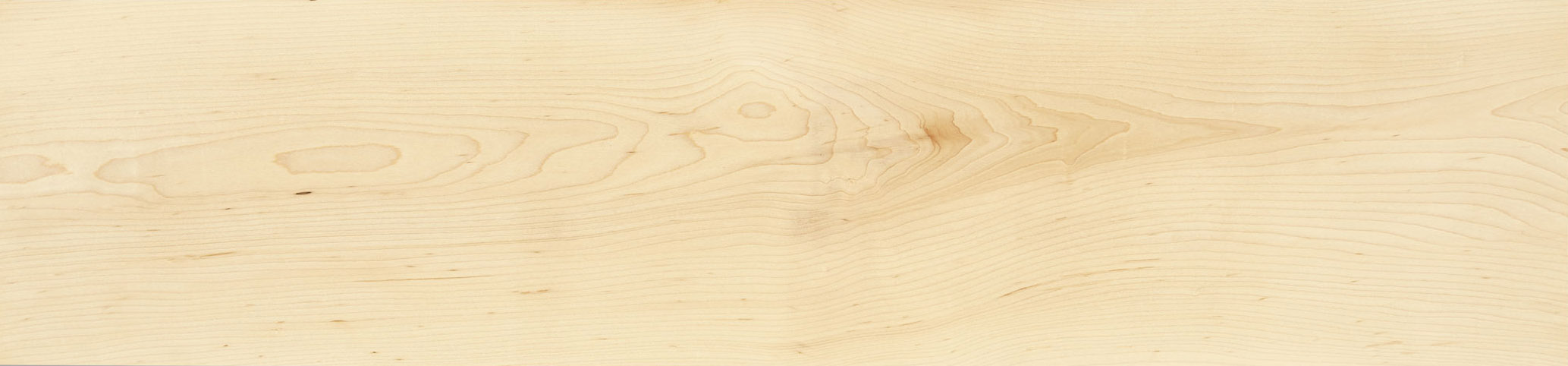
The sapwood is creamy white, sometimes with a slight reddish cast, while the heartwood ranges from light to medium brown. The proportion of heartwood can vary significantly according to growing region. Both sapwood and heartwood may contain pith fleck. The timber has a close, fine texture and is generally straight-grained, though curly, fiddleback, and birdseye figure may occur.

[ Mechanical properties ]
The wood is hard and heavy, with medium bending strength and stiffness and high crushing strength. It is very good for steam bending. More detailed strength information is available in AHECʼs publication Structural design in American hardwoods. The wood is hard and heavy with good strength properties, in particular its high resistance to abrasion and wear. It also has good steam bending properties.
Botanical name (Latin):
Acer saccharum, Acer nigrum
Other names:
Sugar maple, rock maple, black maple
Working Properties:
Hard maple dries slowly with a large shrinkage, so it can be susceptible to movement in performance. Pre-boring is recommended when nailing and screwing. With care it machines well, turns well, glues satisfactorily, and can be stained and polished to an outstanding finish.
Durability:
Rated as slightly or non-resistant to heartwood decay. The heartwood is resistant to preservative treatment, but the sapwood is permeable.
main uses:
Flooring, furniture, panelling, kitchen cabinets, worktops and TABLETOPS, interior joinery: stairs, handrails, mouldings, and doors. The HARD-WEARING properties and tight smooth grain make this species ideal for high traffic flooring applications, such as theatres, concert halls, gymnasiums and basketball courts.
Other Information:
The lighter coloured sapwood will tend to darken over time on exposure to UV light. Hard maple lumber is often sorted for the white (sapwood) colour, which the NHLA grading rules define as White maple or Sap maple. For more information, refer to AHEC’s publication The Illustrated Guide to American Hardwood Lumber Grades.